Portable laparoscopy simulation trainer to improve surgical skills

T-Box
Goal
To design a portable D-box trainer that elevates the training hours of resident surgeons, trains relevant skills for a laparoscopic surgery. The designed device has to be cheaper than existing D-box simulators at the training centre(NSALK).
My Role
Apart from ideation and research which was a group effort, my specific roles were User Journey mapping, Concept Development, Prototyping and 3D visualization.


Background
Resident surgeons in Norway have to undergo a series of training on medical simulations to develop skills before they can perform laparoscopic surgeries on patients. Currently, the class schedules and availability of the simulation centres don’t match. Resident surgeons perform laparoscopic surgeries without adequate practice, thus compromising on the patient safety.
The task provided to us is to Design a portable laparoscopic simulation trainer (cheaper than the current laparoscopy D-box simulator) that can be taken home by medical students to practice and refine their surgical skills.
This project was taken up in collaboration with SINTEF(largest research organisation in Europe) and NSALK(National Competence Service for Advanced Laparoscopic Surgery) Norway.


Research
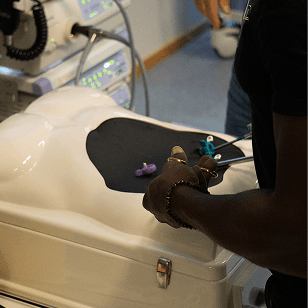
USER INTERVIEWS | ACTUAL SURGERY OBSERVATION | FIELD VISIT OBSERVATION

Painpoints



Challenges
Lack of motivation to practice
The simulation centres have busy schedules, limited availability of slots. The resident surgeons lacked the motivation to practice outside class hours.
Expensive and Bulky
The low-fidelity laparoscopy trainers at the simulation centre are quite expensive to be given away to the resident surgeons for practice. The simulation trainers are bulky to be easily carried around.
Poor camera quality and display
The camera’s used do not provide the accurate depth of field, making it difficult to train hand-eye coordination. The cheap low-fi simulators available in the market use the mobile phone cameras and screens (smaller screens than reality).
Poorly designed low-fidelity trainers in the market
The cheap low-fi laparoscopy simulation trainers or DIY trainers available are crappy and made with no reference to realism. They lack the ergonomic positioning from actual laparoscopic surgery.
Out of 12 interviewed, almost all resident surgeons had completed an actual surgery without any prior training on simulators, thereby compromising patient safety.
Current User Journey


Ideal User Journey


Low-fidelity Mockups and Testing
Creating low fidelity mockups and running tests from the initial ideation stages provides key insights. These were a fast and cheap way of testing concept ideas, make choices and develop further.


Prototyping and Testing
Prototyping and user testing was an integral part of the process. The designs were developed into mock-ups and tested by Surgeons and other stakeholders at every stage to ensure that the design was developed to the vision.

T- Box
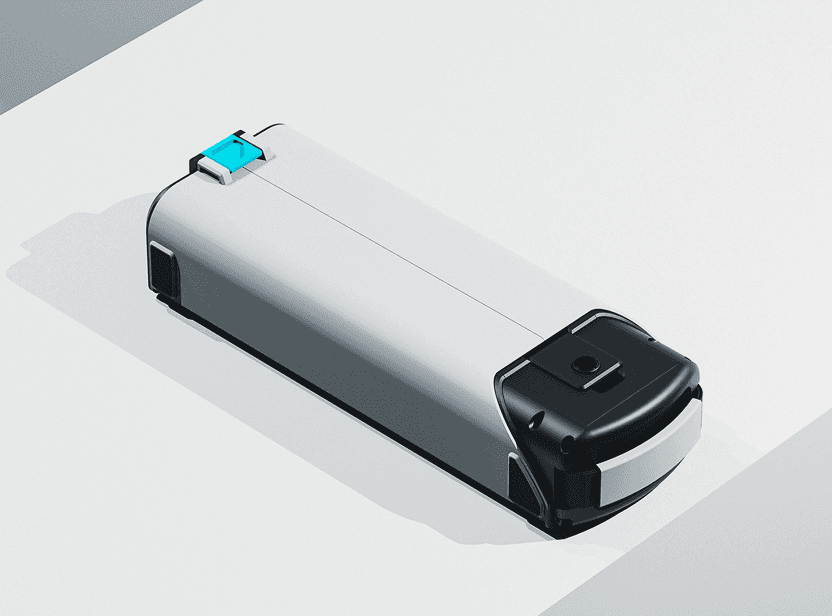
T-Box is a low-fidelity laparoscopic simulation trainers designed to motivate resident surgeons to practice their surgical skills. It is portable and designed to be fit into the backpack and assists resident surgeons to enhance and level up their surgical skills to ensure patient safety.

Portability - Fits easily into a backpack
T-Box is an all in one solution that the resident surgeons can borrow from the institution to practice from their homes. It can easily be carried around in the backpack or on it’s own. Also stores the trocars to keep them safe.


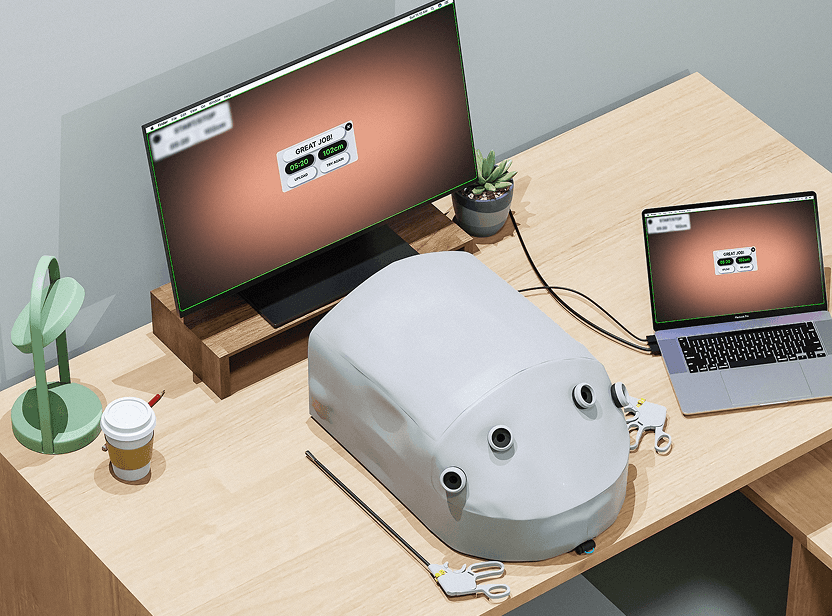
Gamification of training to motivate users
The gamified concept fosters a healthy competition between resident surgeons in a class. They can compete to see who sets the best time or tops the ‘Leaderboards’. The participants move up across various levels - Beginner, Novice, Expert, etc.
Mimics the real surgical positioning
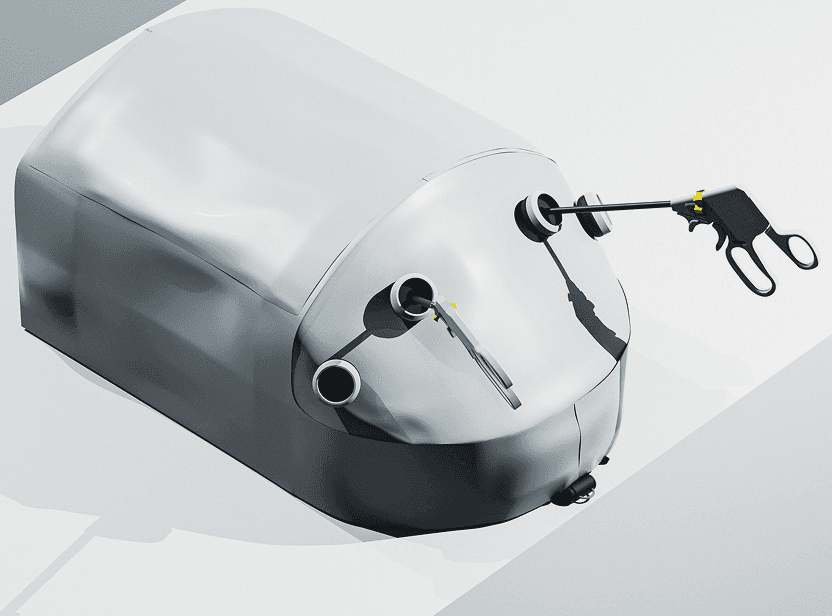
Designed to train the resident surgeons in close relation to what to expect in an actual laparoscopic procedure. The structure of the simulator mimics the shape of the patient’s abdomen and positioning.


Better camera and movement tracking
Equipped with two cameras to facilitate the ideal utility. The primary camera displays the simulation task on the screen with accurate depth of field perception. The secondary camera tracks the movement of the trocars to navigate the area without the user having to move it manually.


Product Setup
T-Box is designed as a flat pack device that can be conveniently carried and be put together seamlessly to serve its purpose. As its meant to motivate the users to train more, the device is designed to be assembled quickly without feeling like a chore.

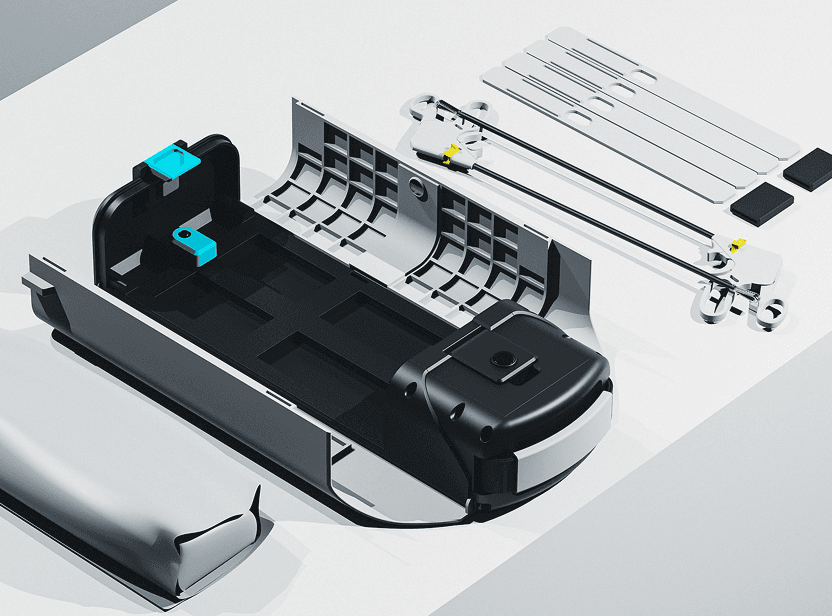



Manufacturing and Assembly
For the initial batch (30 nos.), high quality 3D printing was the recommended manufacturing method. After further implementation and testing, for commercialization and mass manufacture, injection molding could be adopted.